
Scoliosis, a sideways curvature of the spine, often appears during the pivotal teenage years, a time already filled with change and self-discovery. Navigating the teen years with scoliosis can be challenging, but it’s possible to build confidence, express your style, and find effective pain relief.
Here’s a comprehensive guide on how to cope with scoliosis as a teen.
What is scoliosis?
Scoliosis is a spinal condition in which a person’s spine twists and curves to the side. While a normal spine runs straight down the back, a spine with scoliosis may tilt or twist, which can affect posture and alignment.
Scoliosis is most common in children and teens, especially during growth spurts between the ages of 10 and 15. This medical condition can range from mild to severe, depending on the degree of curvature.
It’s often painless, but more serious cases may cause back pain, uneven shoulders or hips, or breathing issues.
The exact cause of scoliosis is often unknown, though some cases are linked to neuromuscular conditions, birth defects, or injuries.
How is scoliosis diagnosed?
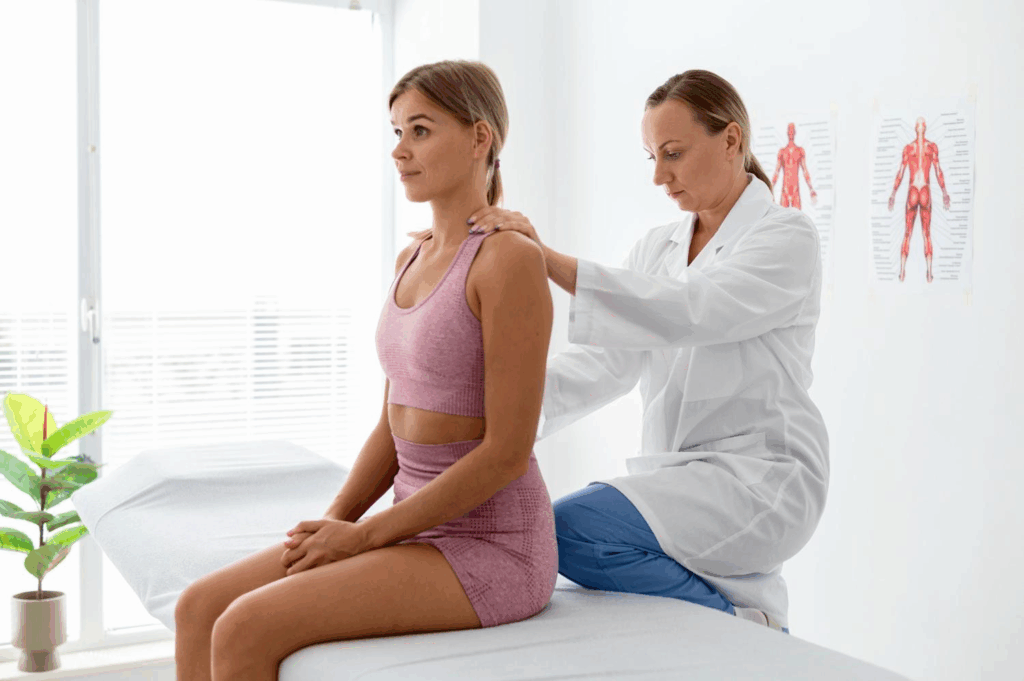
Scoliosis is diagnosed through a combination of physical examination, medical history, and imaging tests. During the physical exam, a doctor or a nurse may perform a basic posture check, often using the Adam’s Forward Bend Test, where the person bends forward at the waist.
The examiner typically looks for uneven shoulders or shoulder blades, a visible rib hump or prominence on one side, as well as uneven waist or hip measurements. If scoliosis is suspected, imaging helps confirm the diagnosis and measure the curve.
X-rays are the most common imaging technique. It shows the spine’s shape and measures the degree of spinal curvature. The spinal curvature of 10 degrees or more is typically considered scoliosis.
MRI or CT scans are also used to diagnose scoliosis. These imaging techniques are used if there’s concern about underlying causes, such as spinal cord abnormalities or nerve involvement.
Common treatments for scoliosis
Treatments for scoliosis vary depending on the severity of the spinal curve, the age of the patient, and whether the curve is getting worse. Some of the most common treatments include observation, bracing, and physical therapy. Surgery is also an option for severe curves that impact health or function.
The observation treatment is typically used for mild cases (curves under 20°) or when the person is still growing. Regular check-ups and X-rays are scheduled every 4 to 6 months to monitor for progression. Usually, no active treatment is necessary unless the curve increases.
A scoliosis brace is recommended for moderate curves (20 to 40°) in growing children or teens. The point of the brace is to prevent the curve from getting worse, not to reverse it.
Braces are worn for 16–23 hours a day, depending on the doctor’s advice. Common types of braces include the Boston brace, the Milwaukee brace, and nighttime braces like the Charleston bending brace.
Physical therapy is also an option because it helps improve posture, flexibility, and back strength. Therapy may be used alongside bracing or in mild cases.
And finally, there is also the option of surgery. It is usually considered for severe curves (typically over 45 to 50°) or when scoliosis is worsening quickly.
The most common procedure is spinal fusion, where rods, screws, and bone grafts are used to straighten and stabilize the spine. Surgery aims to stop progression, relieve pain, and correct deformity.
Building confidence with scoliosis
Confidence can take a hit when you feel different, especially if you wear a brace or experience posture changes. But remember this – scoliosis doesn’t define who you are, it’s just one part of your story.
To boost your self-esteem when you have scoliosis, you should talk about it, practice positive self-talk, and embrace your uniqueness.
Don’t be afraid to open up to friends or a trusted adult. Sharing your experience can reduce anxiety and help others understand. You can also connect with others who have scoliosis, whether through support groups or online communities. Doing this can help you feel understood and less alone.
It’s crucial to be kind to yourself. Replace negative thoughts with affirmations about your strength and uniqueness. Remember, scoliosis is just one part of who you are, not your whole identity.
Many teens eventually come to see their scoliosis as a source of strength and individuality. Sharing your story or even showing your back and scars can be empowering.
Fashion tips: dressing with scoliosis
Having scoliosis or wearing a scoliosis brace doesn’t mean you have to sacrifice style. It just means being creative and thoughtful with your wardrobe. Choose clothes that make you feel comfortable and confident, whether that means showing off your back or wearing something that provides more coverage.
If you wear a brace, high-waisted shorts or pants in stretchy materials work well underneath. For outerwear, size up in thicker fabrics like denim or cargo pants for comfort. Flowy dresses, maxi skirts, and A-line skirts are easy to wear over a brace and offer both elegance and coverage.
Fashion for scoliosis is about expressing your personality. There’s a growing movement of scoliosis-friendly fashion, including special lines and even fashion shows.
Pain relief strategies
While not everyone with scoliosis experiences pain, it can be a factor, especially during growth spurts or if you’re very active. Some of the most helpful pain relief strategies include exercise, physical therapy, massage and hydrotherapy, bracing, and medication.
For instance, regular, targeted exercises can strengthen the muscles supporting your spine, reduce pain, and improve flexibility. Activities like Pilates, yoga, swimming, and stretching are particularly beneficial.
A trained therapist can teach you exercises to improve posture, reduce discomfort, and strengthen your back. Additionally, customized exercise programs and stretches designed for scoliosis can help manage pain and improve posture. Different types of massages and hydrotherapy can help relax muscles and provide temporary relief from discomfort.
As mentioned, wearing a brace can also relieve scoliosis-related pain. For some, wearing a custom-designed brace can not only help with pain but also with posture as well, particularly if recommended by your healthcare provider. And last, but not least, over-the-counter pain relievers like acetaminophen or ibuprofen can be used, but always consult with your doctor about appropriate use.
Final thoughts
You are not alone. Thousands of teens live with scoliosis and lead full, active, stylish lives. Whether you’re navigating treatment or embracing life post-diagnosis, know that support is out there, from doctors and family to online communities and peers. Being confident isn’t about being perfect. It’s about owning your story, and scoliosis is just one chapter.